[personal profile] yosrathabet posting in [community profile] asianamlitfans
 
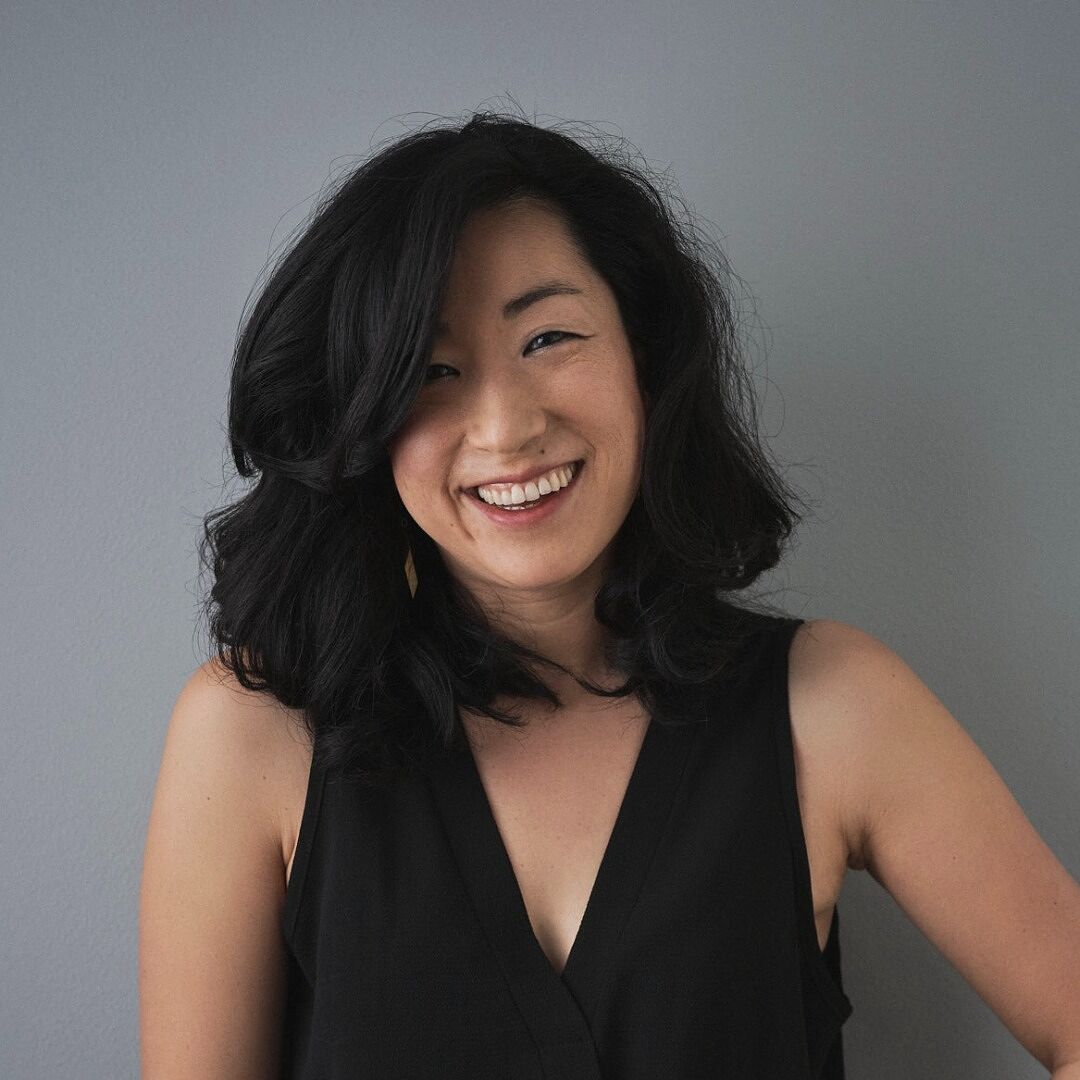
Vincent Yu’s Seek Immediate Shelter


Vincent Yu


Written by: Prof. Stephen Sohn

Managing Editor: Yosra Thabet

Wow, Vincent Yu’s Seek Immediate Shelter (2026) was the surprise read for me this year! Super affecting in ways I did not anticipate. Let’s move quickly to the description: “Confronted with the options of fight or flight, planning or panicking, the people of Beckitt are stripped to their basest instincts and revealed as their truest selves. Russ squeezes his family into the bathtub, leaving his own survival in question; Nina sends an unforgivable text to her daughter; Milly confesses her unrequited love; and David hits the gas, speeding away from his wife and child. Then the second message comes in: FALSE ALARM. PLEASE DISREGARD. ALL CLEAR. First comes relief, then comes the reckoning, as each person is forced to face the unforeseen aftermath of decisions they thought might be their last. Vincent Yu’s searing debut follows this eclectic cast of characters over a period of many years, suggesting that the conflicts the missile exacerbated were simmering under the surface long before, and proving the ripple effects of the false alarm will be felt for years to come. An urgent, fiercely heartfelt exploration of relationships in all forms, Seek Immediate Shelter explores the balance between love and loyalty, betrayal and forgiveness. What choices would you make if you thought your life were on the line? And if you survive, can you ever redeem yourself?” I’m going to start with my only serious critique of the novel: I do think the marketing team should have billed this text as a novel in stories rather than simply as a novel. The formal conceit of this text is much like a story cycle: each chapter is given to a character; characters do not repeat as the main focalizing character, but the main focalizing character in one story might appear in another as a minor character. The story cycle element is also enhanced by the fact that all of them are more or less set in the same Massachusetts town that I believe is fictional (Beckitt), which allows this work to achieve more sustained connections, despite the shift in characterological perspectives. Perhaps the emotional center of the novel emerges in the Nina storyline related to the last-minute text she sends her daughter Cate right after the alert has gone off; Nina ends up calling Cate selfish, with the context being that Cate has left Nina and her husband alone, while she lives a life far apart in California. She is in a relationship with another woman (queer storylines make up a fair number of the relationships overall in this novel), and they are raising a young child. While Nina and Cate’s relationship is certainly on the rocks, Nina has been keeping a secret: she is dying. Nina’s husband, Dean, tries to mediate their complicated relationship. This particular story is the only one to extend significantly beyond the actual false missile alert. Dean will be given his own story in the penultimate chapter, where he attends a grief support group in the wake of Nina’s death. Dean ends up striking a fledgling romance with a woman named Nadine, who technically is not grieving a physical death but is instead there due to the fact that her son is now in jail due to the fact that her son killed another person when driving drunk. This story explores not only the possibility of new love even in an advanced age but also the renewed connection that Dean makes with her daughter Cate. Of all the stories, the last one with Grant Gao, is perhaps one of the most challenging, as we see someone connected to a nursing facility struggle with an opioid addiction. I was scared that Yu was going to leave us with a particularly depressing story to end this text, which it was, but Yu gives us a glimmer of hope in the final actions that Gao engages in when he hears the missile alert go off. Overall, Yu presents us with an intriguing narrative conceit in which each story really conveys how a given set of individuals are impacted when the alert occurs; every person reacts differently. One person might try to save themselves at the expense of their loved ones (David Li), while others rise to the best version of themselves (Grant Gao), even if it is a momentary period of heroism. Whatever the case, Yu’s ability to craft such detailed portraits of single characters is extraordinary; indeed, Nick, the Asian American bluegrass violinist, has one of the most endearing stories you will see in this collection, and you’ll stay enraptured as one story after another conveys the challenges of intimacy and vulnerability that these characters struggle to share with their loved ones. A brilliant debut; we’ll be excited for what’s next.


Buy the Book Here:


https://us.macmillan.com/books/9781250410122/seekimmediateshelter/

[personal profile] yosrathabet posting in [community profile] asianamlitfans
 
The Loom Tree

Angela Mi Young Hur


Written by: Prof. Stephen Sohn

Managing Editor: Yosra Thabet


Once upon a time, in what seems like another lifetime and another place, I met the talented young author Angela Mi Young Hur, who had just published the coming-of-age novel, The Queens of K-Town (Macadam Cage, 2007). Since then, Hur has gone on to move out of the United States, published another novel (the criminally overlooked Folkorn, published by Erewhon in 2021, which I read under the dark depths of COVID and so much appreciated its continent-hopping mysticism), and has come to us with this gift of a third novel, The Loom Tree (Erewhon, 2026). The best way to describe The Loom Tree is that it’s if Once Upon a Time, the television series, had gone global and hybridized with something like Kuang’s Babel. Let’s get to that marketing description: “Sharon [Gohm] and her daughter V’s points of origin hold common threads—both Korean American teenagers, raised by single mothers and searching for identity in the California suburbs. But during a Finals week celebration, high schooler V, compelled by strange impulses, crawls into a hollow tree trunk. That night in a fever haze, she sees gleaming strands of illegible text hovering over her body—flowing between her and her mother, leading to a long-forgotten diary. With the aid of a luminous quill, a fountainhead of Sharon’s memories spill onto the faded pages. V witnesses her mother map out her past through drawings, diagrams, and reclaimed histories of her brief time at Alvsdahl, an exclusive East Coast college. Here, legacies and heiresses claimed descent from Bluebeard or Cinderella, grappling for control over family stories that could grant them terrifying abilities or burn them to ash. An Asian girl with an unknown inheritance was no one—until her discoveries cracked open Alvsdahl’s secrets. Sharon’s rewritten narrative—of classroom rivalries, animal professors, debauchery in the woods, threatening Godmothers, and world-shattering powers—unfolds line by line as V desperately tries to help her mother, ultimately learning how to wield Sharon’s story to transform them both. Lyrical and tender, Angela Mi Young Hur’s The Loom Tree is a magical campus novel centering two young women walking the thorny path toward adulthood, the fractures between parents and their children, and the global mythologies connecting us all.” The diegetic conceit is interesting in this novel because there is a very robust intradiegetic story level which is narrated by Sharon herself and focuses on her schooling at Alvsdahl. The main diegetic story level is in fact a frame that is told from V’s perspective. When V’s magic begins to pour out of her, it also works in concert with Sharon’s abilities, magnifying both in a way, and Sharon begins to recount her past, revealing histories that will upend both of their lives. At the core of this story, then, is the issue of maternal genealogies concerning Korean American women. The rupture that appears between V. and Sharon is largely more illustrative of the various schisms occurring over time. The novel thus stages a kind of intergenerational feminist rapprochement brokered through the intriguing form of the low fantasy. Those readers who are especially invested in fairy tales will have much to adore about this novel, as Hur really mines variations on the tales we know best and then throws in others that some readers will just have less familiarity with. One of the strengths that Hur employs is her newfound geographical and cultural attachments, which emerge through the embedded ways in which European folktales appear. Those with a Korean linguistic background will know right away that Hur is playing with the word “gom,” which means “bear,” and Sharon might be connected to the figuration that Hur calls a “liminal.” These are individuals in this fictional world who can take on animal forms. Although Hur never fully bears out this concept with respect to Sharon, there is much to laud about Hur’s take on fairy tales, where they are remixed and reconceptualized for the modern audience, replete with a set of students who are well aware of 90s pop culture. There is a bit of a “scooby gang vibe” as Sharon eventually teams up with a number of other students at Alvsdahl in order to spur a changing of the guard related to the school’s villainous Grandmistress. Here, I will provide my requisite spoiler warning, so you’ll want to stop reading here. Ultimately, what readers discover is that the Grandmistress has been using Alvsdahl as a way to exploit and to harness the powers of its students in order to find her own child, someone who apparently must be killed so that she can extend her life. The Grandmistress believes that she locates her child and literally sucks the life out of some of the most gifted and useful students in order to keep looking for this child across time. She employs, for instance, a student named Faye (one of my favorite characters, who is both quirky and spirited), whom she uses to bring students to Alvsvdahl, who may have magical abilities that the Grandmistress can use to prolong her life and to find out where her child may be. She also takes up with a woman named Aurora with dreamwalking abilities, to keep herself and various students in a suspended animation, so they can live for much longer periods and be tactically awakened anytime somebody like her child might have been born. Aurora ultimately becomes the Grandmistress’s partner, but their relationship is obviously under duress given the expectations that Aurora must continually employ her powers in a way that essentially leaves her in a state of constant semi-sleep. But Hur has truly given us a romance at the heart of this particular text: love of all types, whether it is between friends or between partners, is the solution for some of the darkest obstacles that Sharon and her fellow students face. Of course, for V, such an inheritance is equally, if not more, important so that she comes to understand the lineage of amazing Korean American women ancestors that have come before her. In this sense, Hur has also reimagined and reconceptualized the mother-daughter narrative trope so common to Asian American literature through her ability to weave it together with low fantasy genre conceits. On a purely consumerist level, the novel is absolutely immersive and transports you to an imaginary location filled with magic and mischief. An excellent option to read after the more depressing fantasy pieces by the aforementioned R.F. Kuang. We’ll revel in the possibilities that fairy tales offer us in Hur’s impressively crafted The Loom Tree.

Buy the Book Here:


https://www.kensingtonbooks.com/shop/the-loom-tree-9781645660880/

Profile

jamieliu

November 2026

S M T W T F S
1234567
891011121314
15161718192021
22232425262728
2930     

Style Credit

Expand Cut Tags

No cut tags
Page generated Nov. 12th, 2026 04:46 am
Powered by Dreamwidth Studios